After the experiment with crocodile stitch pattern, I got a habit of trying new stitches. Especially the one that people usually think of as a crochet or knitting stitch. So my next stop is the waffle stitch blanket pattern.
Waffle Blanket Pattern
To sew a waffle stitch blanket pattern in sewing, sew a grid of evenly spaced vertical and horizontal lines on fabric, then press or tuck the intersections to create a raised, waffle-like texture.
I know it sounds complicated, but it gets easier with the waffle stitch blanket pattern free PDF.
Let me show you practically.
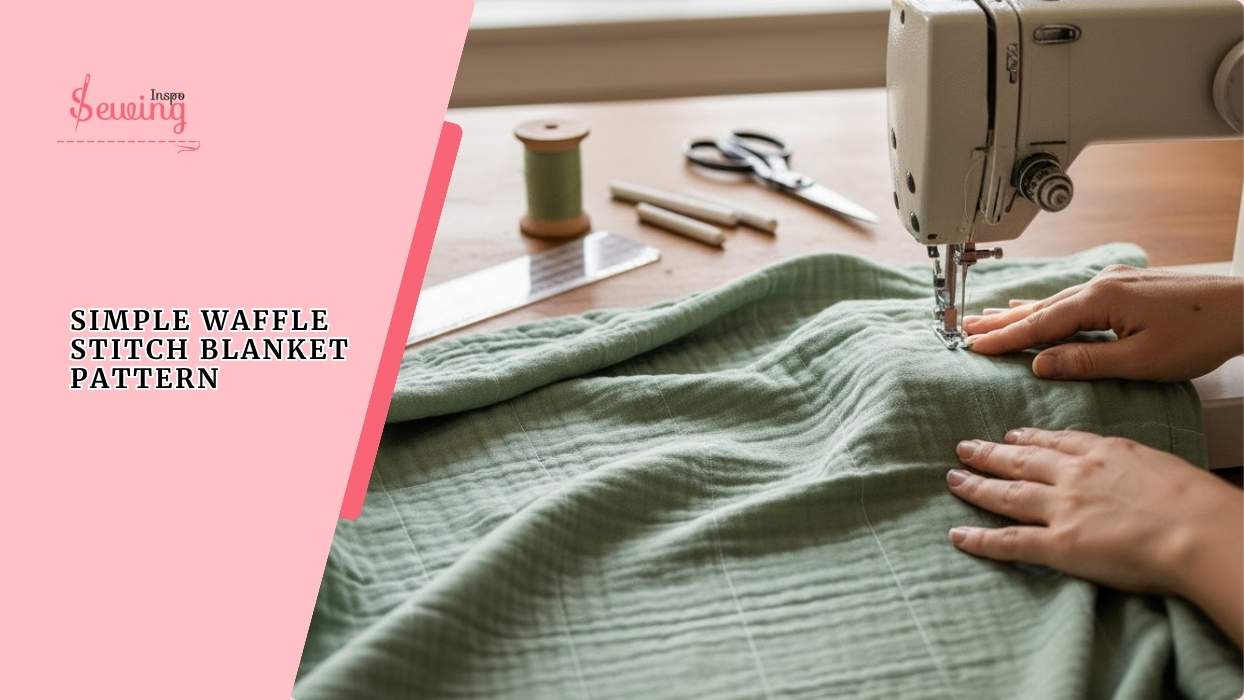
Table of Contents
Is Waffle Stitch Good For Blankets?
Yes, waffle stitch is great for blankets because it’s cozy, soft, and has a nice textured look that traps warmth.
It gives your blanket a plush, handmade feel and looks stylish too. Just keep in mind it can be a bit thick. So, it’s perfect if you want something extra comfy and snuggly.

How To Do A Waffle Stitch Blanket Pattern In Sewing?
To do a waffle stitch blanket pattern in sewing, follow the steps-

Mark The Line With A Chalk
Now, I’m laying the fabric flat on the table. Using my ruler and chalk, I mark vertical lines about 1.5 inches apart.
I take a deep breath because precision matters. We want our waffle squares nice and even. I do this for garter stitch, too.
Once the vertical lines are done, I mark the horizontal lines the same distance apart. It’s like drawing a giant checkerboard on your fabric, and already, you can start to imagine how the waffle pattern will appear.

Sew the Vertical Lines With Running Stitch
Next, I grab my sewing machine and start stitching along the vertical lines.
I keep the stitch length at around 3 mm so it’s strong but not too tight. I make sure to backstitch at the beginning and end of each line. I do this for cape pattern sewing, too.
As I sew, you can see the first hint of texture forming. It’s subtle but satisfying like wave pattern stitching.

Sew the Horizontal Lines
Time to turn the fabric and stitch the horizontal lines. As I carefully sew across, the squares start to really take shape, forming that classic waffle grid. If you’re using batting, I hold the layers steady so nothing shifts.
Otherwise, the pattern could get distorted. You can already feel how the blanket is beginning to take on a soft, textured look.

Create the Waffle Texture
I take my iron and lightly press the intersections of each square inward. You can also use finger pleats if you like.
It’s satisfying to see each little “waffle square” puff up. For a more defined texture, I go around each square with a bit of extra topstitching.
You can even add tiny tuck lines in the centre if you want that 3D effect to really pop. I love running my fingers over it at this stage.
That soft, raised texture is exactly what makes waffle blankets so cosy.

Finish the Blanket Stitch Pattern
Finally, I trim any excess fabric and hem the edges neatly. If you want, you can add binding all around for a polished finish.
I give it a last press, and there it is, a beautiful, textured waffle blanket that’s soft, cozy, and perfect for snuggling.
It’s amazing how just a few careful steps and a bit of patience can transform a flat piece of fabric into something so tactile and inviting.

Waffle Stitch Blanket Pattern Free PDF Free Download
If you are new, you may feel overwhelmed. Use this PDF.
Frequently Asked Questions
What fabric works best for a waffle blanket?
Soft cotton, flannel, muslin, or double gauze work really well. These fabrics are easy to handle and give a nice drape. If you want extra puff, sandwich in a thin layer of batting.
How thick should my waffle squares be?
I usually go for 1.5-inch squares for a classic look. If you prefer smaller, tighter squares, you can do 1 inch. Just keep the spacing consistent so the texture stays even.
Do I need a special sewing machine?
Not really. A regular home sewing machine works fine. Just make sure it can handle multiple layers if you’re using batting, and use a medium stitch length (around 3 mm).
Final Thoughts
And that’s it, your very own waffle stitch blanket, made entirely with sewing. The texture is soft, cozy, and visually interesting.
It gives a handmade vibe that’s hard to beat. It’s a little time-consuming. But every step is worth it when you feel that soft, puffy texture in your hands


Leave a Reply