
I loved to experiment with different chain stitch machines. The past few days have been hectic. I tried the Falak chain stitch machine the other day. So today’s experiment was the worlden chain stitch machine.
And honestly, the process isn’t that hard to do.
Worlden
To use a Worlden chain stitch machine as a beginner, thread the machine properly, guide your fabric gently, and let the feed dogs move it while the looper forms continuous chain loops for strong, stretchy seams.
Sounds easy? Let’s demonstrate it like singer sewing machine stitch.
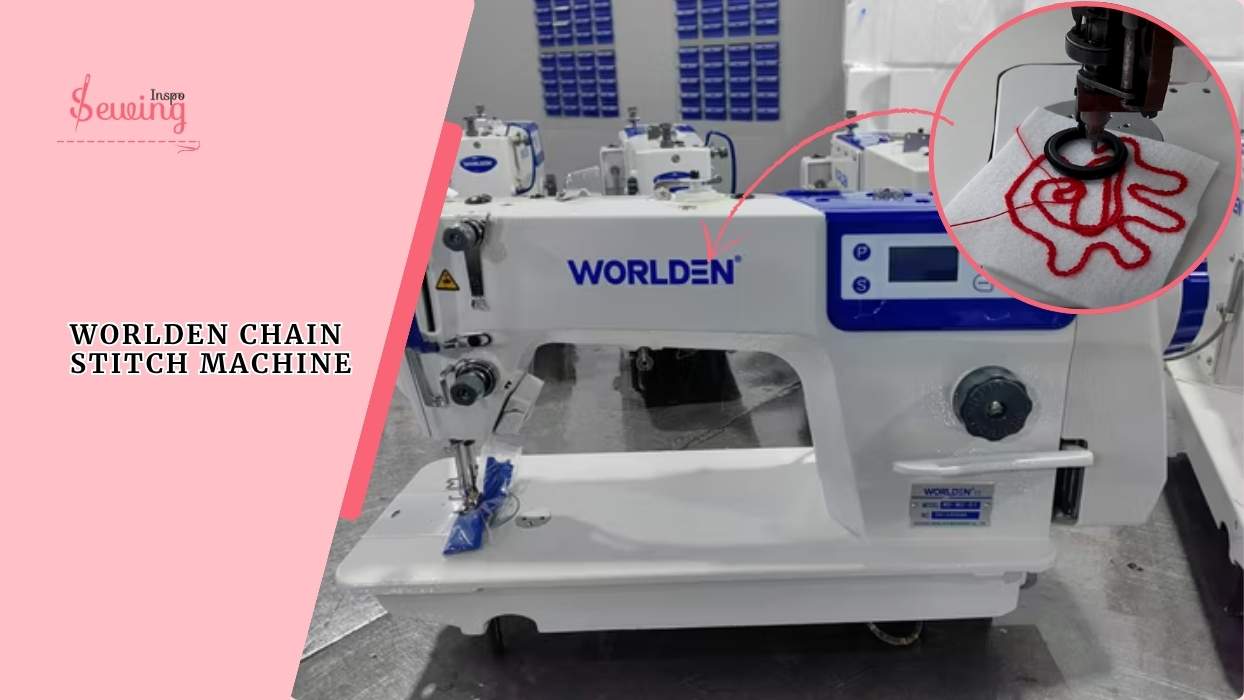
Table of Contents
Worlden Chain Stitch Machine Setting
To set up a Worlden chain stitch machine, first position the handle at the 6 o’clock mark, pointing toward you. If you’re switching to moss stitch, loosen the screw on the worm gear and rotate it so the looper hook faces backward. You can use it for a pick stitch machine.
For threading, guide the needle to meet the thread, leave a few inches of tail, and use the threading wire to pull the thread through the machine’s inner parts. Stitching feels so smooth that you will say good sewing machine.
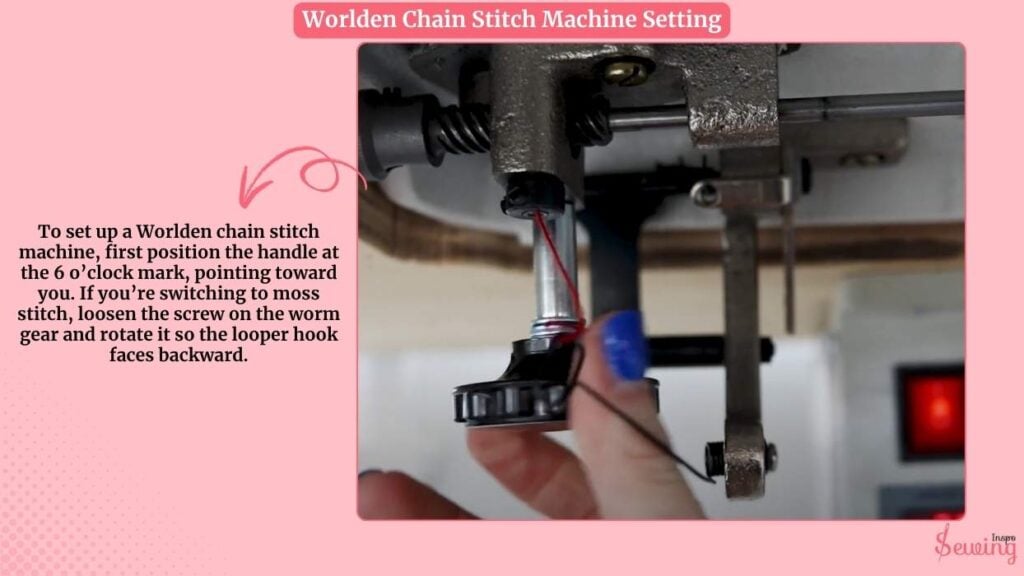
Finally, fine-tune the tension by adjusting the tension nut. You need to tighten or loosen gradually until the stitches look clean and even, without any skipped or puckered areas.
This machine can do all stitches. But don’t expect ladder stitch on sewing machine on this machine.
How To Use Worlden Chain Stitch Machine?
To use worlden chain stitch machine, follow the steps,
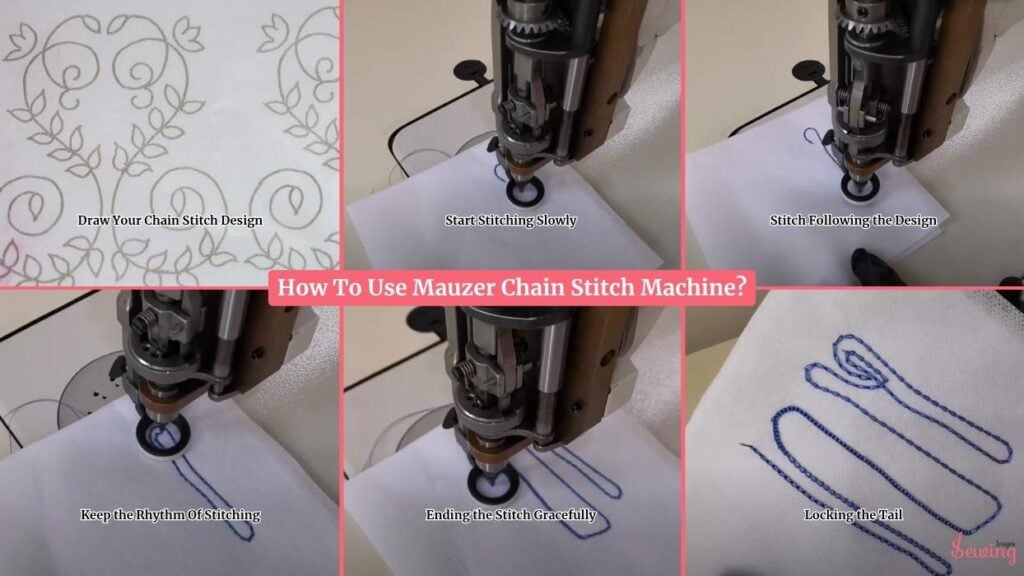
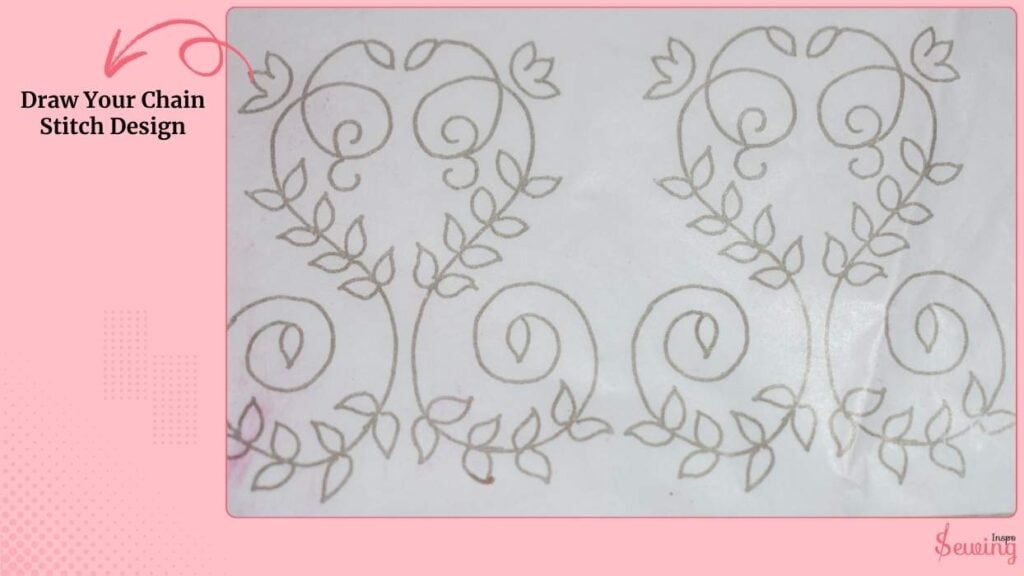
Draw Your Chain Stitch Design
I smooth it out with my hands so there are no wrinkles, because every little crease will show up in the chainstitches.
Then I draw my pattern on it. I use this method for sewing with single needle lock stitch machine.
Once it feels flat, I lower the presser foot. It gives me that satisfying little click, holding the fabric firmly but not stiffly, like a gentle hand keeping it steady.
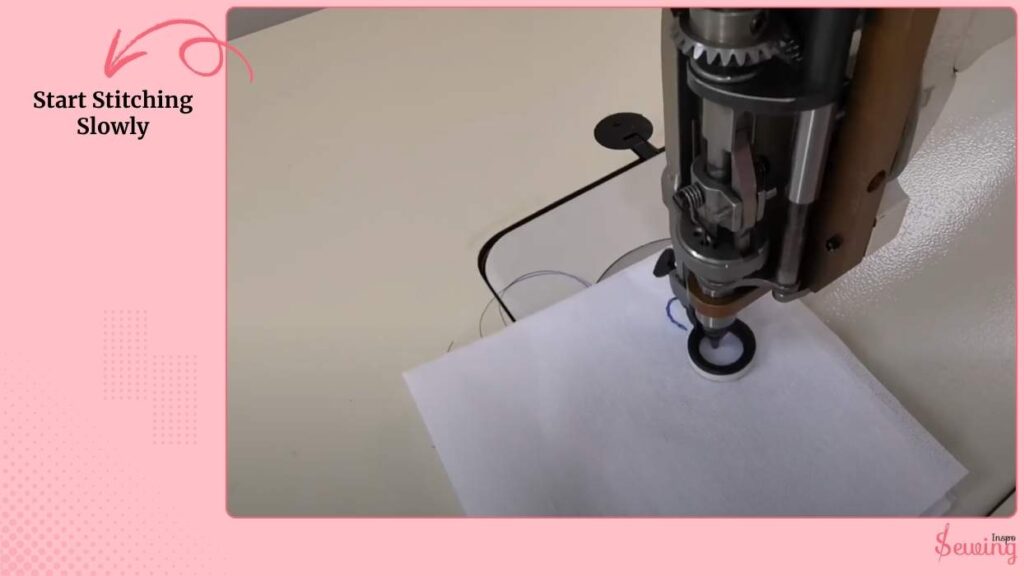
Start Stitching Slowly
I press the foot pedal just a little, enough to let the needle dip in and out of the fabric. Each time it pierces, the looper underneath hooks the thread, pulls it through the last loop, and creates that gorgeous chain.
I don’t rush. I let myself feel the rhythm. The steady hum of the motor, the click of the needle, the smooth pull of the fabric unlike double one.
The fabric is moving on its own, thanks to the feed dogs. My job is not to drag it but to gently guide it, like steering a pencil across a page.
Stitch Following The Design
I start guiding the fabric like I’m sketching. If I want a curve, I turn the fabric slowly, pivoting it bit by bit. The chain stitches bend gracefully, following the path like ink on paper.
- For straight lines: I keep my hands steady, letting the machine do most of the work like brother sewing machine stitches.
- For circles or flowers: I rotate the fabric smoothly, letting the chain stitches spiral into shape.
- For borders: I keep my eyes on the edge of the fabric, tracing along like I’m outlining a drawing. It also works in flatbed chain stitch machine.
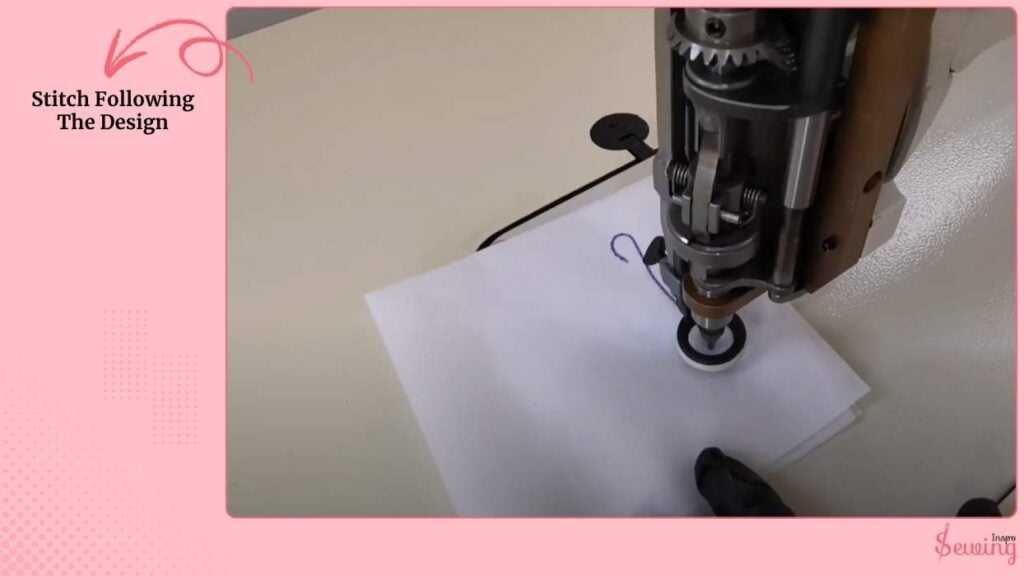
It feels less like sewing and more like free-motion embroidery. The machine is my pen, and the thread is my ink.
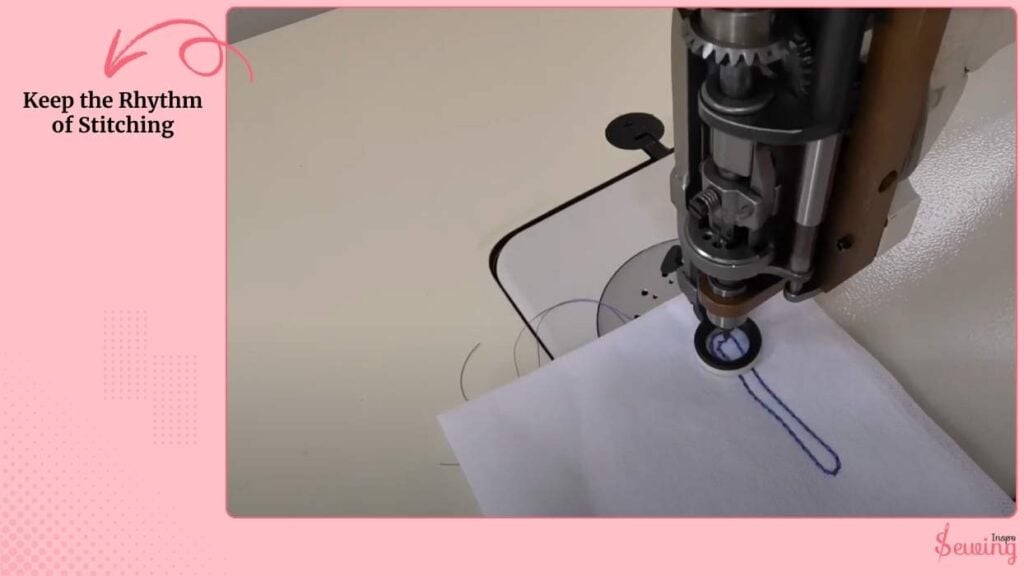
Keep the Rhythm Of Stitching
Once I get comfortable, I press the pedal a bit more, letting the machine pick up speed. The chains link faster. It can even do triple stitch.
But I still keep my hands relaxed. If I tense up, the lines look shaky, just like a drawing done with a jittery hand.
Whenever I need sharper turns or corners, I slow down again. It’s just like sketching. Fast strokes for bold lines, slow strokes for details.
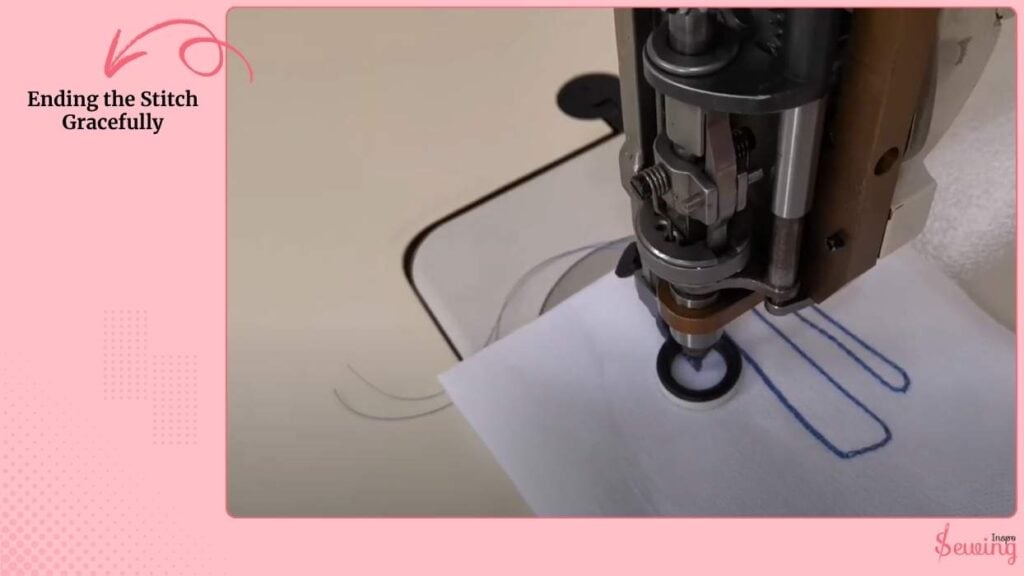
Ending the Stitch Gracefully
When I finish my design or reach the end of a line, I let the machine sew a few stitches past the fabric. This creates a little tail of loops, almost like the flourish at the end of a signature.
I lift the presser foot, slide the fabric out, and snip the thread.
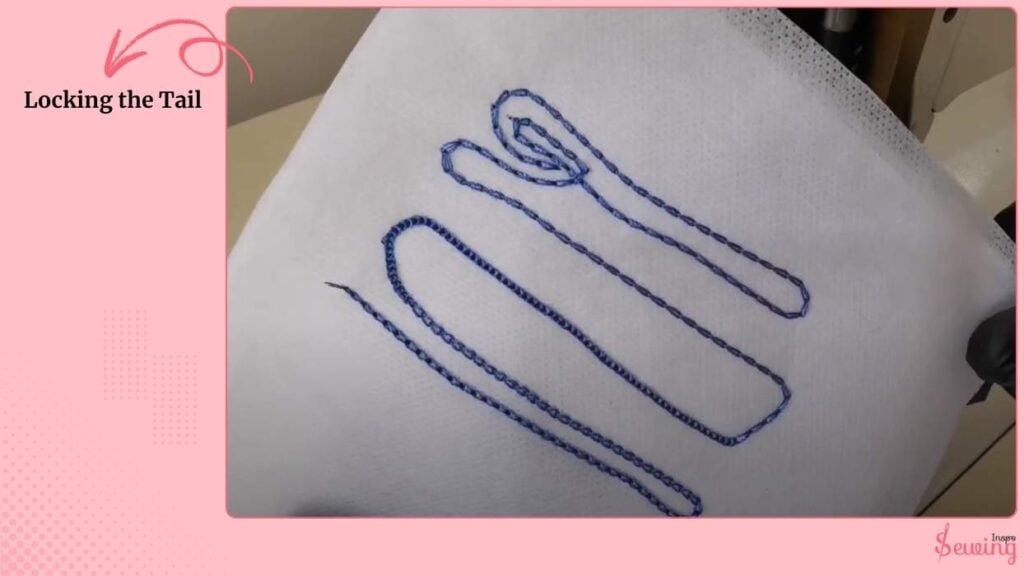
Locking the Tail
To keep my design secure, I take that thread tail and pull the last loop through itself. This locks the chain so it doesn’t unravel. It’s like tying a knot at the end of embroidery. I do this for a portable sewing machine, too.
It makes everything feel finished and safe. You can try this for the Mauzer chain stitch machine, too.
If you like demonstration then read this pink singer sewing machine.
Frequently asked questions
Can I sew clothes with it, or is it just for embroidery?
You can do both! Many people use Worlden chain stitch machines for decorative embroidery, borders, and embellishments, but they’re also used in garment production (like hems and waistbands).
Why are my stitches coming out loose or unraveling?
That usually means the thread slipped from the looper, the tension isn’t set right, or you forgot to hold the starting tail. Always keep light tension on the tail at the beginning and check your tension plates.
Admire the “Thread Drawing Of Chain Stitch”
When I hold the fabric up, the chain stitches look like a doodle sketched in smooth loops. It’s not just a seam anymore. It’s a design.
Flowers, spirals, borders… whatever I guided my fabric into, it now lives there permanently, drawn in thread.


Leave a Reply