
I was just understanding darning and mending, and now I have caught up with this patching thing. I was again roaming around, confused about all the darning stitch and repairing methods.
So, without roaming around confused, I decided to run to Grandma and ask the difference between darning and patching. She smiled and said,
Darning V Patching
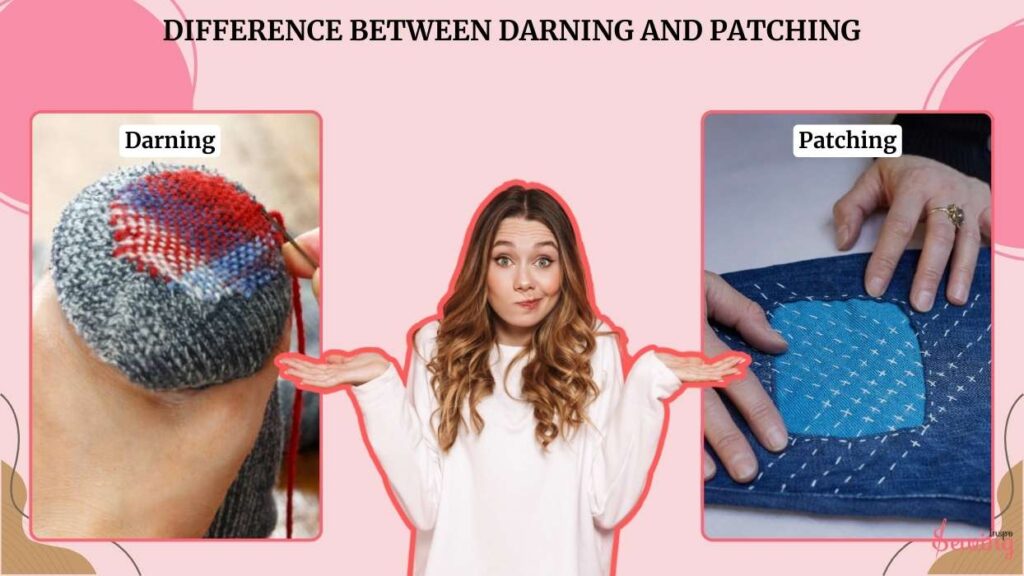
Darning involves weaving threads to repair holes or tears seamlessly, while patching adds a piece of fabric over or under the damaged area for support.
I know you are still not clear. Let’s clear the differentiate between darning and patching more.
Main Facts:
- Darning is a repair technique where threads are woven into the damaged area.
- Patching involves sewing a separate piece of fabric over or under the damaged area. That’s what darning patches are.
- Darning is ideal for small holes or thinning fabric where maintaining the original look is important.
- Patching is better for larger tears or worn-out areas requiring reinforcement.
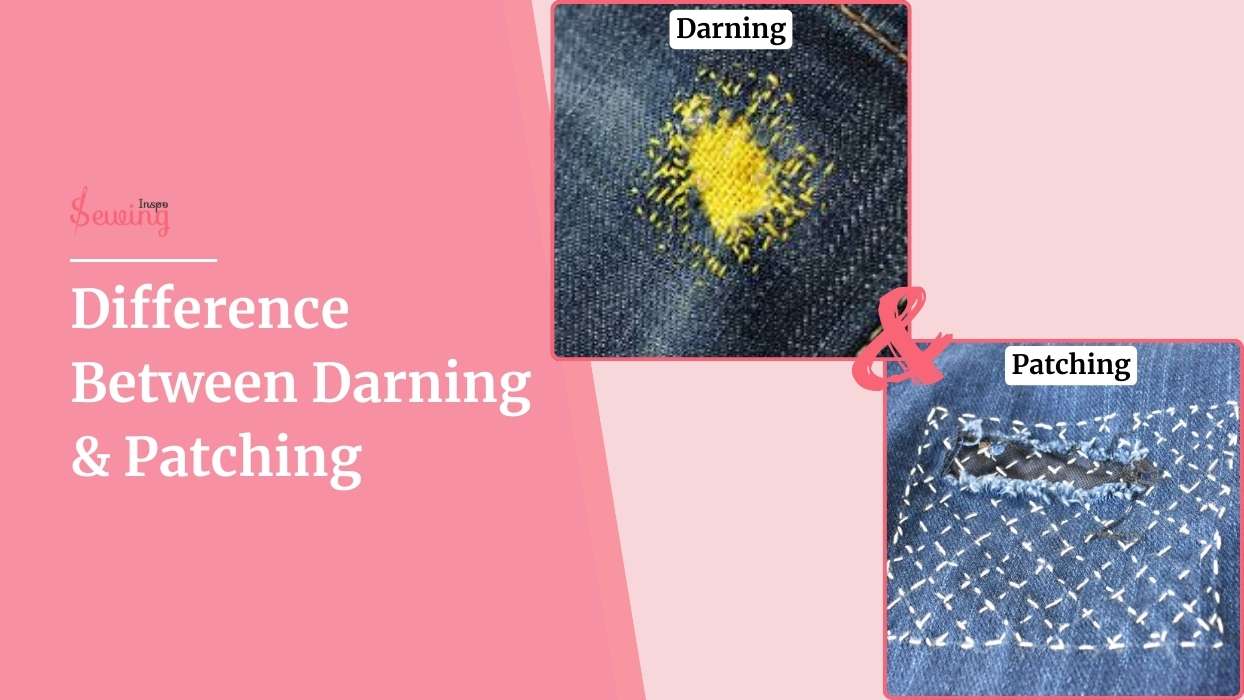
Table of Contents
Darning And Patching Difference Between
Before getting into the difference between darning and patching clothes, let’s answer your basic questions 1st.
What Does Darning Mean?
Darning is basically a way to repair holes or worn-out spots in fabric by weaving new threads into the damaged area. Think of it like filling in the gaps to make the fabric whole again. You can use various methods too. My favourite ones are,
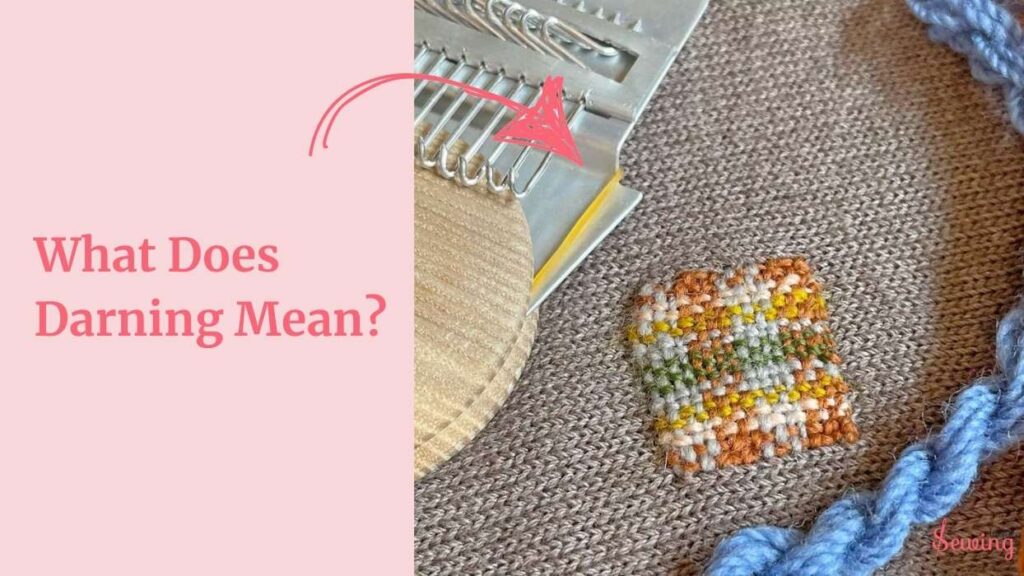
It’s great for things like socks, sweaters, or any clothes where you want to keep the original look instead of adding a patch.
What Does Patching Mean?
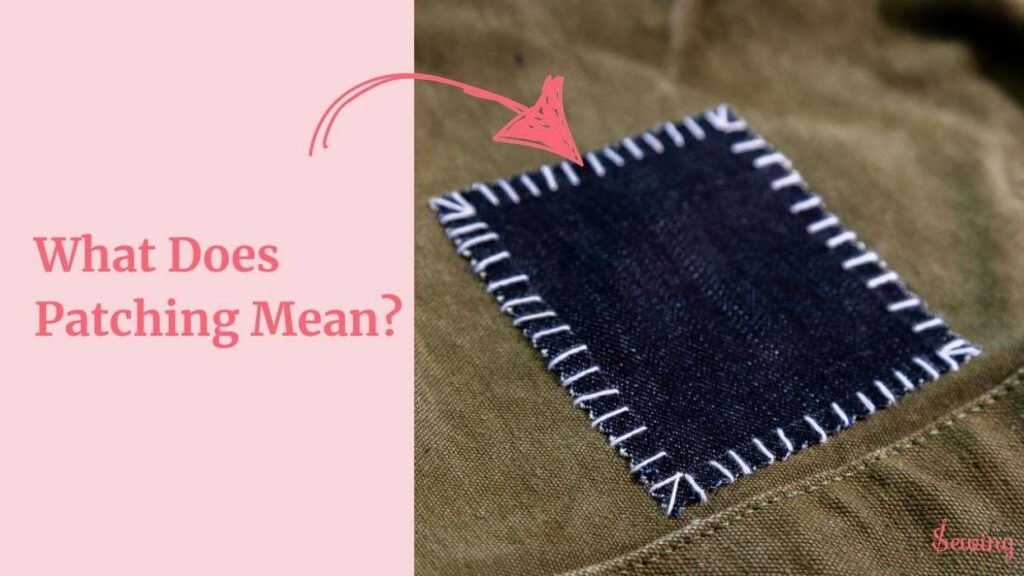
Patching is when you sew a piece of fabric over or under a damaged area to cover up holes or tears. That’s what a darning patch is.
It’s like giving your clothes a protective band-aid! It’s super handy for reinforcing worn-out spots or adding a little extra durability, and it can even be a fun way to add some style with colorful or patterned patches. This also applies to the mending technique.
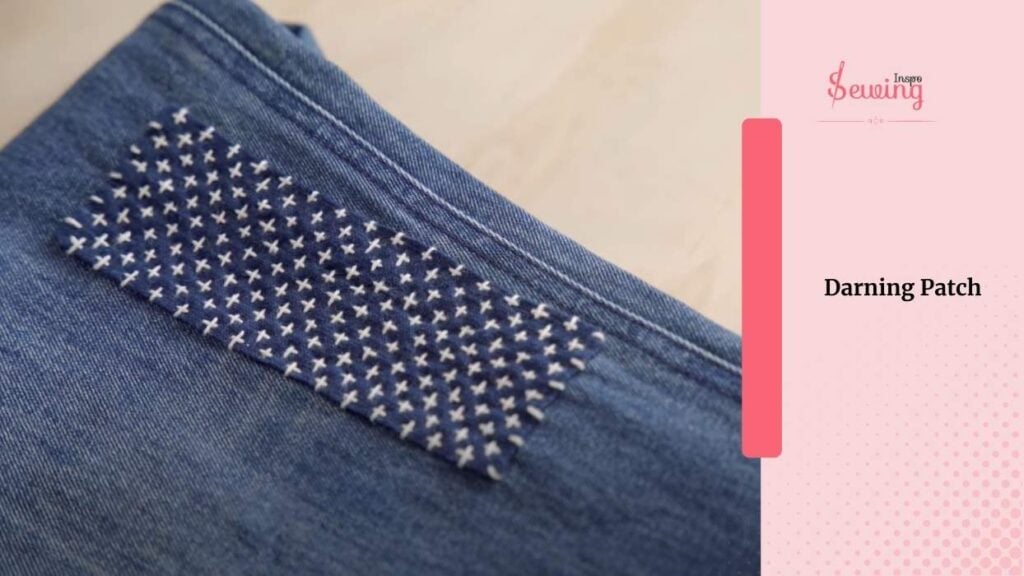
So What Is A Darning Patch?
A darning patch is a way of repairing holes or worn-out spots in fabric by weaving new threads into the damaged area.
Instead of sewing on a separate patch, you “patch” the fabric by creating a woven pattern with your thread right over the tear.

Key Difference Between Darning And Patching
So basically, the difference between darning and patching is that darning is a stitching method to repair cloth, and patching is using another piece of cloth to repair cloth.
But rather than that, there are more differences to tell. As in:
| Topic | Darning | Patching |
| What It Is | Fill in holes or worn areas by weaving threads back and forth. | Covering a damaged area with a piece of fabric sewn over or under it. |
| How It Works | Uses a needle and thread to mimic the original fabric weave. | Uses a separate fabric piece that’s stitched onto the garment. |
| Best For | Small holes or thinning fabric where you want to keep the original look. | Larger tears or areas that need extra strength or reinforcement. |
| Appearance | Seamless and blends with the existing fabric, it is almost invisible. | Visible and can be decorative or plain, depending on your choice. |
| Skill Level | Requires patience and a bit of practice to get the weaving just right. | Easier to do, even for beginners, with basic sewing skills. |
| Durability | Works well for light to medium wear and tear. | Adds extra strength, ideal for heavy use or structural reinforcement. |
| Popular Uses | Socks, sweaters, and fabric you want to restore without adding bulk. Mainly for woven fabric. | Jeans, jackets, and items needing both repair and style updates. Mainly used for tears a thread out of place in. |
The difference is kinda like darning and sewing, right?
Darning Patches, Which Is Better?
Darning and patching each have their moment to shine, so which one is better really depends on what you’re fixing! Grandma says while smiling,
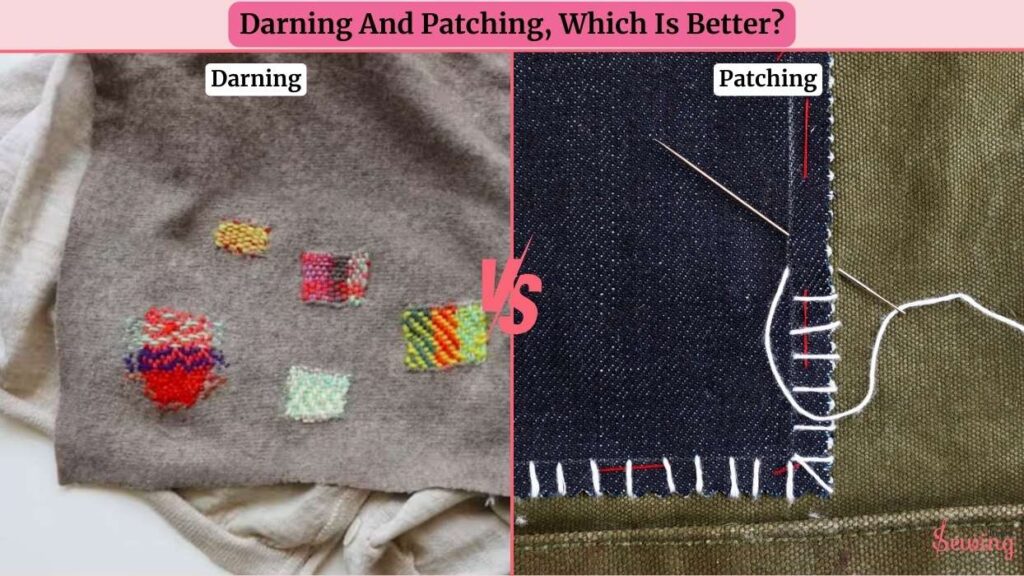
If you’re looking to repair a small hole in something like socks or sweaters and want to keep it looking seamless. That’s why darning is my favorite one from any sewing book. It’s subtle and blends right in. It creates a beautiful form of any type of stitch.
But if the damage is bigger or the fabric is thin and worn out, think jeans or jacket patching is usually the better choice. If you want something light then do darning linen. Sometimes you can go for a darning patch too.
It adds strength and durability, and you can even get creative with funky patches for a unique look. So, it’s not about which is better overall. It’s about what works best for the job!
When To Patch And When To Darn?
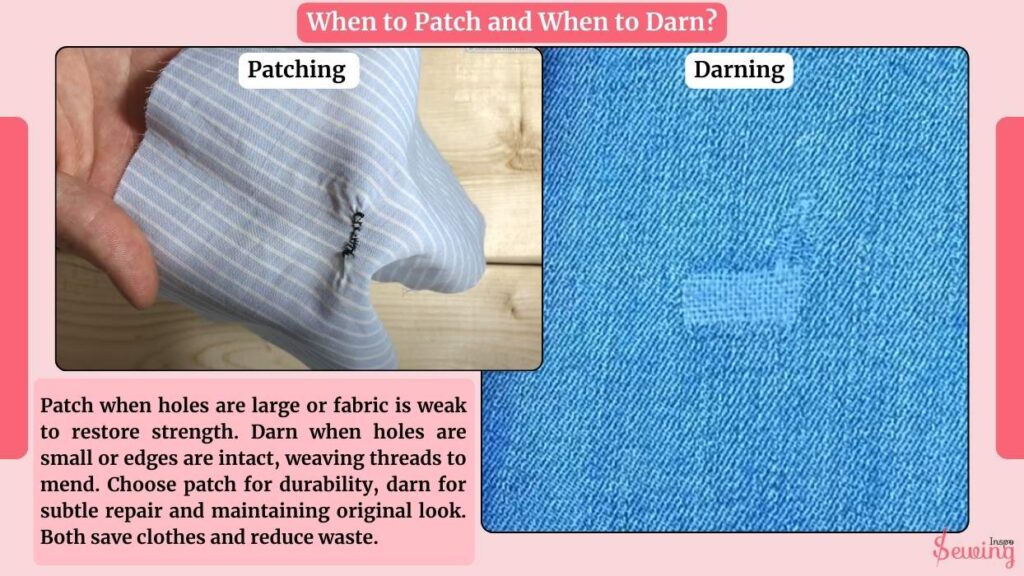
Patching is best for larger holes or areas that take a lot of wear, like jeans or jackets. You basically cover the hole with a piece of fabric. Darning is for smaller holes or worn-out spots, especially on things like socks or sweaters. You weave thread over the hole to restore the fabric without adding extra bulk.
So, patch for big damage, darn for small spots!
Closing
Grandma smiled as she showed me a darned sock and a patched jacket, saying, “Each repair tells a story.” Darning quietly restores, blending into the fabric’s history, while patching boldly adds strength and style. The choice isn’t about which is better. It’s about what your garment needs and the story you want it to tell.


Leave a Reply